Wednesday, 27 April 2011

Sedges and new wings

For a long time now my dry sedge collection has been rather dismal and a bit embarrassing. I must admit, I tend to get by each season with an Elk-Hair caddis or a Green Peter. Although this maybe reflects my limited opportunites for fishing with sedges than anything else.  Anyway, where is the fun in one or two patterns?  So during Easter, with some time for the tying bench, I decided to start building up a respectable collection and returned to E J Malone's book for some assistance. Reading Malone's book is always an exploration, yet sometimes intense and tiring. The limited number of colour photo plates in the book means scrutinising the dressings very intently, hoping you have the material or in the right colour/shade and often you don't. Indeed, you can expect to deviate from the original out of prgamatism. Moreover, there is often up to three/four versions of the pattern - forcing you to think about which one to tie. Yet, this can be decided for you by material availability. Of course there is great scope to adapt these old patterns with new materials.  Yet, I love the book. Besides the large range of dressings and unknown gems, Malone offers a much needed historical and fascinating insight into Irish fly dressers/dressing. Seminal!

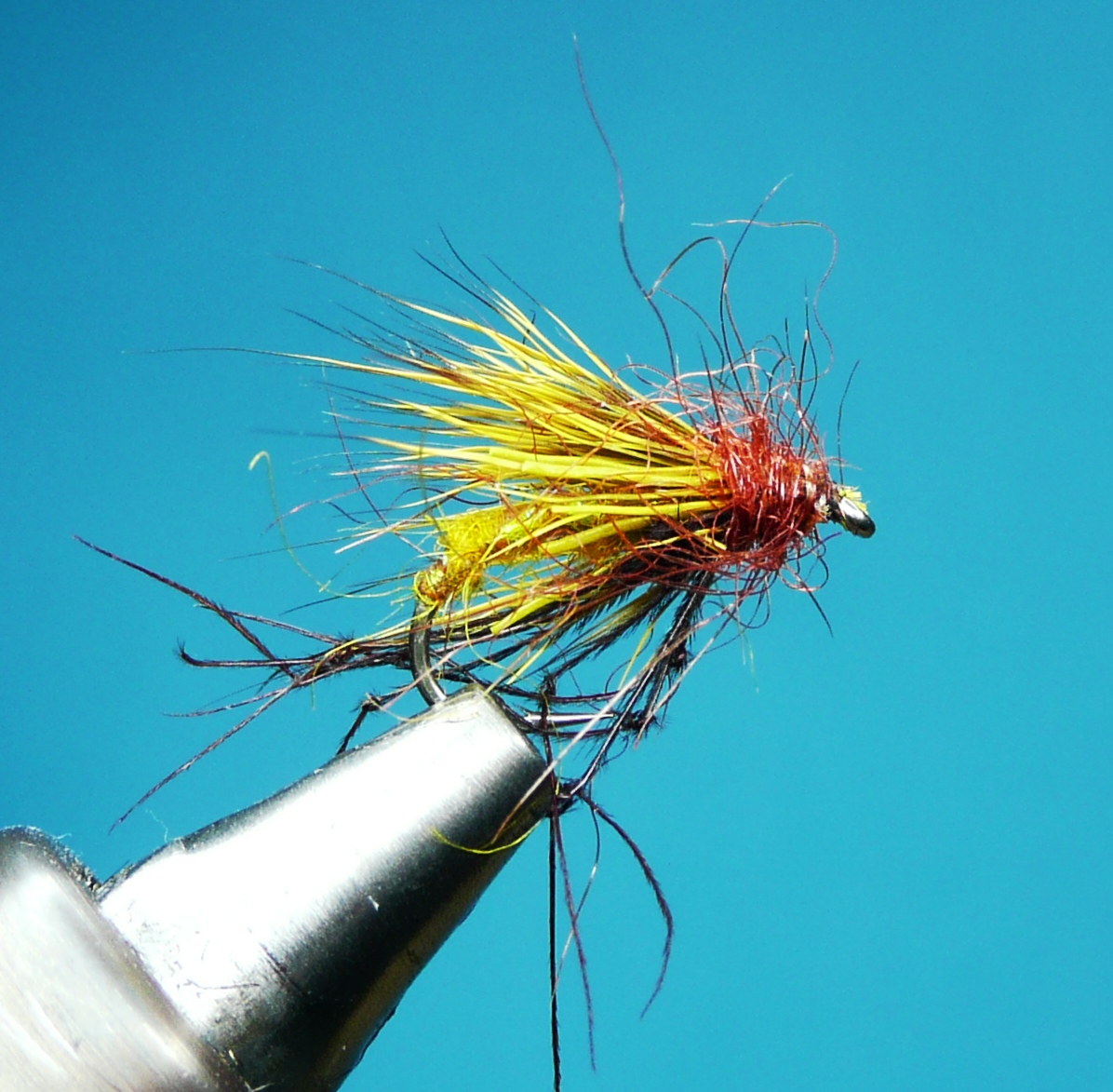
Back to sedges - I tied some Great Red Sedges and Bann Sedges to start off with. For the wings, I coated the natural wing material in hard and nails varnish and left to dry.

The Bann Sedge (orange)
Hook: Fulling Mill Light dry fly hook, Size 8-10
Body: Ginger hare's ear mixed with orange seals fur
Wing: Brown hen coated in varnish
Hackle: red game cock hackle
Attenane: Cock pheasant tail cock fibres


Great Red Sedge
Hook: Fulling Mill Light dry fly hook, Size 8-10
Body: Rusty fly-rite poly yarn
Body hackle: Furnace cock hackle tied from the shank
Wing: Grouse wing (or brown hen) lightly dressed with hard as nails varnish (and dried)
Hackle: Furnance cock


 Materials for above wing: Grouse Wing feather coated in hard as nails varnish


I also tied a few with the new winging material from Hemingway - purchased from Troutcatchers. Although synethic wings are something I have never bothered much with in the past, I always liked their look and decided it was it time to give them a go. They are easy to work with. You just place the folded wing over the body and tie in at the stub. For me, the problem was the rest of the fly. I tied up a great red sedge - replacing the natural feather with a synethic wing. This just looked wrong. Following others, it is advised to incorporate natural materials underside or overside the wing - such as deerhair, CDC or snowshoe hair. This sort of harmonises the fly and reduces that hard look from the wing.

Sam Anderson's Green Peter (Variant)
Body: Peacock herl
Hackle: Ginger cock (tied from back to front)
Wing 1: Hemingway brown wing
Wing 2: Natural CDC (tied in looped fashion)
Thorax: Hare's ear dubbing
Attenane: Two cock pheasant tail

Red Sedge
Body: Rust fly-rite poly yarn
Wing: Hemingway's synethic wing with dear hair before and after
Front area : grey squirrel


The next dressing is a variation of Martin Westbeek's (Netherlands) 'Snowshoe Caddis' as featured in his Danica fly page:  http://www.danica.com/flytier/mwestbeek/snowshoe_caddis.htm.  Similar to above, it is intended for fishing low in the water with a suggestion of an emerger.

Snowshoe caddis (variant) 
  Body:Green-olive caddis flyrite poly-yarn
Underwing: grey snowshoe (teased out and down).
Wing: Hemmingway wing, with coq de leon fibres
Front area: Green hare's plus dubbing

Dabblers

I took the decision a few days ago to replenish my declining stock of dabbler wet flies. The Dabbler series of flies are now 'part and parcel' of lough fishing in Ireland. Fishing on the big Irish loughs without a dabbler or a bumble is similar to going fishing the Dales rivers in Yorkshire without a Partridge and Orange or a Snipe and Purple in the box. You just don't do it! The original dabbler - the Golden Olive, was invented by Mr Donald Mclearn of Dromore, County Down, Northern Ireland in the mid 1990s. He's nicknamed 'dabbler' As far as I know, and I may be wrong, the dabbler began life as an accident. He was tying some Goslings for a competition in Lough Melvin and discovered he ran out of grey mallard  flank. He replaced the grey mallard with bronze mallard and a deadly pattern was born. It is known to take fish anywhere on the cast - although the top dropper is a favourite position. As with many Irish patterns, the impressionistic nature of the pattern accounts for its success and its range of variants. It is further recognised how the cloak style mallard wing offers an impression of an emerging insect.  I always remembered the former 'Trout and Salmon' writer Rod Tye remarking that the main reason why the Dabbler works well is due to the gosling-type wing that encircles the body (Trout and Salmon 2000, May, p.13). Moreover, the cloak style mallard wing causes multiple strands of mallard to split and enclose the fly. This engenders considerable movement and vitality to the fly when pulled through the water. Yet, this appears to be have already considered by dressers before the arrival of the dabbler. Malone remarked how Michael Rogan and fly tiers of Rogan's generation tended to seperate a few strands of the finished wing with a needle - 'believing that individual fibre movement was so important that he combed the whole wing to seperate each fibre' (p.12). Anyway, it is a great fly for the Irish loughs.           

Golden Olive Dabbler
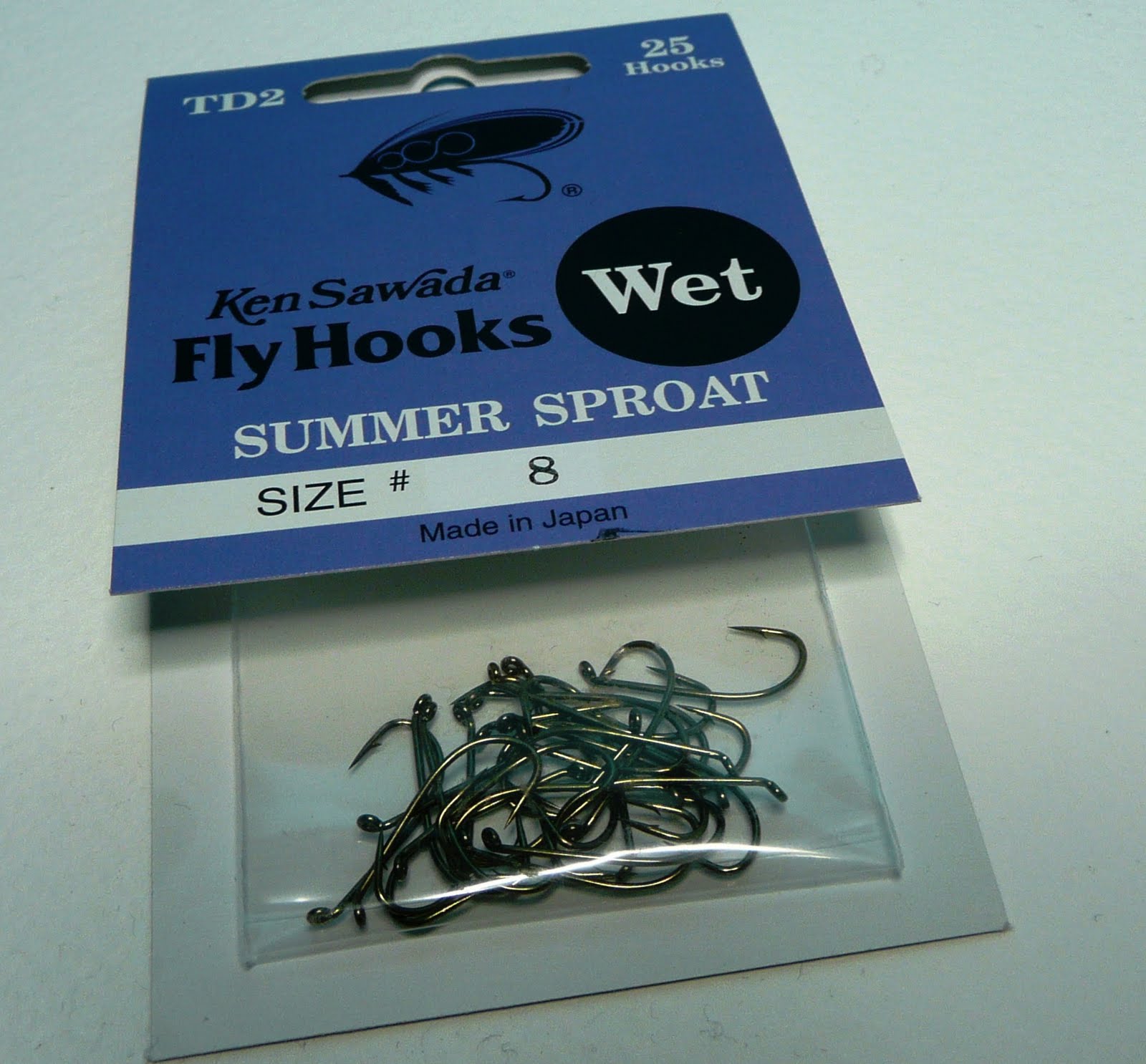
Hook: Ken Sawada Summer Sproat wet fly size 10
Tail: Pheasant tail fibres
Body: golden olive seals fur
Rib: gold oval (fine)
Body hackle: red game
Wing: bronze mallard - tied cloak style


Sunday, 17 April 2011

Hoppers

Bibio Hopper
Hook: B170
Body: red, black and red sealsfur
Rib: pearl lurex
Legs: Black dyed knotted pheasant tail
Hackle: black cock


Oisin's Hopper
Hook: B170
Tag: Red lurex
Body: Green lurex
Legs: Natural pheasant tail knotted
Thorax: Peacock glister dubbing
Hackle: Black cock

Half Hogs

Yellow-brown half hog hopper
Hook: Kamasan B170 size 10
Body: Yellow seals fur
Rib: Pearl Luruex
Legs: Knotted pheasant tail
Wing: Yellow dear hair
Thorax: Fiery Brown seals fur


Harry Potter


Grendair half hog hopper
Hook: Kamasan B170
Body: red-orange seals fur 
 Rib: Pearl Lurex
Wing: Natural coastal deer hair
Legs: knotted pheasant tai
Thorax: Orange seals fur


Viva Half Hog Hopper
Hook: Kamasan B170
Body: Black seals fur
Tag: flou green thread
Rib: Pearl Lurex
Legs: Black pheasant tail knotted
Wing: Black coastal dear hair
Thorax: black seals fur


Sedge-Hog
Tail: Dear hair fibres
Body: claret seals fur
Wing: : two parts dear hair. half rear and half fron of body
Hackle: Brown or red hen 

Ken Sawada Trout Hooks

Last Christmas I acquired some hooks from Japan, by Ken Sawada. I came across Ken Sawada's name in various places - largely as an excellent fly dresser of traditional salmon flies so I wasn't that surprised to discover his on-line fly fishing and fly tying shop. Yet, his range of trout hooks certainly caught my eye, especially his lovely sproat and limerick bend classic wet fly hooks. Despite the unfavourable price on the Yen, I made a covert buying operation (from the wife)and bought several packets of the limerick and sproat bends in size 8 and 10, along with his long shank straight eye limerick bend hooks, for tying goslings, straddlebugs and mayflies etc.  Not dissapointed so far - they are very strong and a high quality look about them. The old limerick is well suited for that classic wet fly. I suppose the next test is hook hold from the fish...will let you know.  

A Rogan's Gosling wet mayfly tied on the 'Old Limerick Wet size 8'.


Tail: pheasent tail cock fibres
Body: golden olive seals fur
Rib: gold oval
Hackle: organge cock
Wing: Grey Mallard flank

Wednesday, 10 November 2010

Dark Olives

The 'Baetis Rhodani'  or the Dark Olive as commonly termed, probably constitutes the first Dun river fishers observe sailing down the river when the season begins. Witnessing this annual event in these first few days always (without fail) starts my pulse racing - as I struggle tying the fly on, nervous and excited. Sounds familar, yes? As such, when tying for the following season, I always graivitate towards matching the dark olive hatch before anything else. Here are a few of the various styles I recently tied for the river dry fly box:

Dark olive poly dun:
Hook: Varivas Standard Dry IWI S-2000 #14
Thread: olive
Tail: Dub Fibbets
Body: olive-brown superfine dubbing
Wing: blue dun poly
Hackle: Blue dun cock hackle


F-Fly Variant
Hook: Varivas IWI S-2000, #14
Thread: olive
Body: Olive silk
Wing: Two natural CDC feathers
Thorax: olive hare's ear


Para-dun dark olive (looped)
Hook: Partridge SLD #14
Body: olive superfine dubbing
Wing: White poly
Hackle: Dun cock hackle
Para-dun olive
Hook: Partridge SLD #14
Thread: olive


Olive para-dun
Hook: Partridge SLD #14
Tail: Microfibbets
Body: Olive Dun flyrite
Hackle: Blue dun
Wing post: Med blue poly


Tuesday, 5 October 2010

CDC Emergers

I spent time today taking advantage of a fresh batch of quality CDC. It is a joy to use and makes it easier if you use quality CDC - from Marc Petitgean.Good, but expensive. I have tied some CDC bubble style emergers. Winterbourne in his blog has tied a lovely CDC comparadun which should be checked out. Looking forward to using these next season  in both the river and the lake.


Dressing:
Hook: Fine wire scud hook, Size 14-18.
Shuck: Krstalflash
Body: Turkey Boit or superfine dubbing
Wing: Dun CDC (tied bubble style)
Thorax: Hare's ear (colour to suit abdomen)

Obviously the styles for adopting CDC in emerger patterns are numerous. Here are several more.

Shuck: Dun CDC fibres
Body: black thread
Rib: gold wire
Wing case: Dun CDC
Thorax: Peacock herl
Hackle: Grizzle

The next pattern is a generic emerger pattern that can be used to represent a variety of hatches. As with many emerger patterns, it is a 'quick tie' as Oliver Edwards would say, and very easy to throw a batch up quickly.


Shuck: Mirage krstyalflash (two strands)
Body: Turkey Boit
Wing: Light Dun CDC
Thorax: Rabbit or Hare's ear to match body

Check out Dave Whiltshire's fly page on the Dancia fly tying site for some lovely CDC styled emergers, http://www.danica.com/FLYTIER/dwiltshire/dwiltshire.htm .I really like his crippled emergers - sleek, slim and deadly looking. Another tyer deomonstrating the use CDC for all sorts of flies is Gianluca Nocentini. http://www.danica.com/FLYTIER/gnocentini/gnocentini.htm.